Building a new home is one of the most significant investments you’ll ever make. The decisions you make during that process—from floor plan to finishes—will shape how your home looks, functions, and feels for decades. And yet, one of the most consequential choices often gets made too late: when to hire an interior designer for new construction.
In new construction, timing isn’t just important—it’s foundational. The difference between a home that feels cohesive, considered, and truly yours versus one that feels pieced together rarely comes down to budget. It comes down to when the right decisions were made, and who was there to guide them.
Here’s what working with a designer early in new construction actually looks like—and why it changes everything about the outcome.
The Best Time to Hire an Interior Designer for New Construction Is Before Plans Are Finalized
If you’re planning a custom home build, the single most valuable thing you can do is bring a designer into the process before construction begins—ideally during the architectural planning phase.
This is the stage where everything is still flexible. Walls can move. Electrical and plumbing can be routed correctly from the start. The kitchen layout can be designed around how you actually cook, not retrofitted around where the pipes ended up. The lighting plan can be wired intentionally, not added as an afterthought.
When a designer is involved this early, every element of your home—layout, flow, lighting, materials, storage, and sightlines—is considered together as a unified whole. The result is a home that feels intentional from the foundation up.
At this stage, changes are thoughtful. Later, they become expensive.
Working with an interior designer from the pre-construction phase is also one of the most effective ways to control costs. When the full design vision is established before the first nail is driven, your builder has clarity. Materials are selected with the complete scope in mind. Budgets are set before spending begins. There are far fewer surprises.
What Happens When You Wait to Hire an Interior Designer
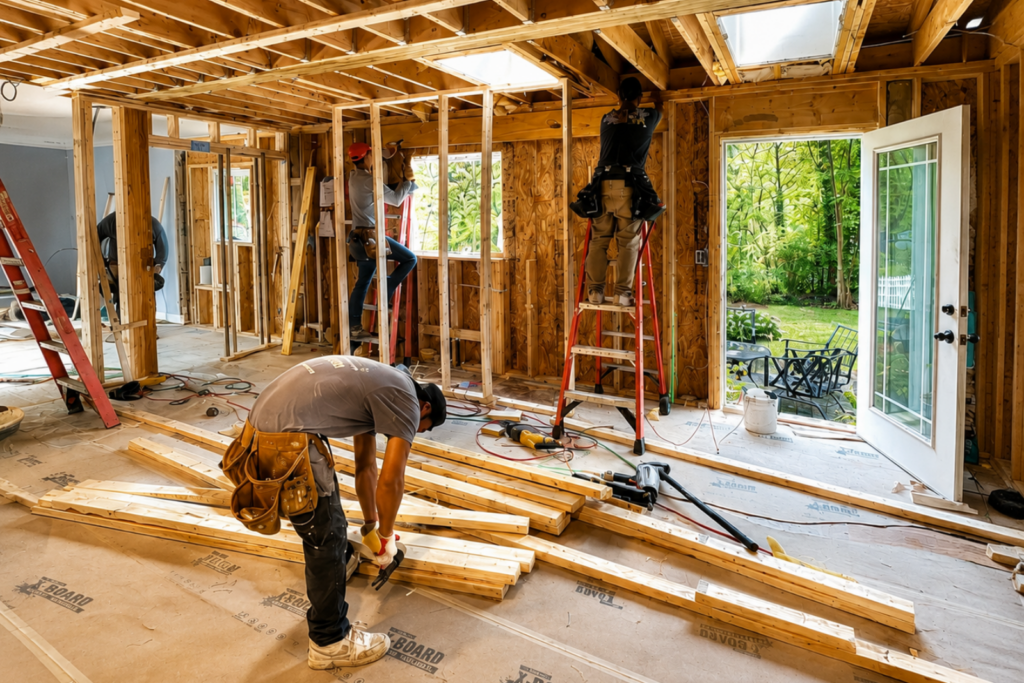
It’s extremely common—and completely understandable—to bring a designer in once construction is already underway. Life gets busy. The builder has momentum. It feels like the project is moving in the right direction. But by the time most homeowners start thinking about interior design, many of the most consequential decisions have already been locked in:
- Electrical and lighting placement
- Plumbing locations
- Cabinet and appliance layout
- Structural and architectural details
Without a designer’s input at those moments, the design process becomes reactive rather than intentional. And that’s when the compromises begin to stack up.
A light fixture gets chosen to fit the existing wiring rather than the room it needs to anchor. A layout gets accepted because changing it now would mean ripping out framing. A custom detail gets value-engineered out because the decision came too late to plan for it properly.
None of these outcomes are catastrophic on their own. But collectively, they’re the reason so many newly built homes feel like they’re missing something—a quality that’s hard to name but easy to sense.
How Early Interior Design Involvement Protects Your Investment
The financial case for hiring an interior designer early in new construction is straightforward: the most expensive changes are always the ones made after the structure is in place.
Mid-project design changes—moving a wall, relocating a plumbing stack, rewiring a room’s lighting—carry costs that are multiples of what those same decisions would have cost in the planning phase. Rework, delays, and rushed ordering decisions are almost always the result of decisions that weren’t made early enough.
When a designer is part of the process from the start, the financial picture looks very different:
- Contractors build from a clear, coordinated set of decisions—not from guesswork
- Materials are specified with the full project scope in mind, reducing waste and mis-orders
- The budget is aligned to priorities before spending begins, not adjusted reactively after it already has
- There are fewer change orders, which are often where project costs quietly balloon
In new construction, early design investment doesn’t add cost. It redirects it—toward things that matter, away from things that don’t.
Designing Your New Home as a Complete, Cohesive Experience
A well-designed home isn’t a collection of individual rooms. It’s a connected experience—and the best new construction interiors are designed with that in mind from the very beginning.
When a designer is involved throughout the build process, every space is considered in relation to every other. Sightlines are intentional. Materials transition naturally from room to room rather than stopping abruptly at doorways. The lighting plan accounts for how spaces flow into each other. Storage is built where it’s actually needed, not placed wherever there was leftover square footage.
The difference between a home designed this way and one that was finished room by room is immediately felt, even if it’s not always immediately articulated. It’s the difference between a home that feels complete and one that feels like it’s still being figured out.
Interior Designers and Builders Work Better Together—Not Against Each Other
One of the most persistent misconceptions about new construction design is that bringing in an interior designer creates friction with the builder—that it adds another voice to an already complex process.
In practice, the opposite is true.
Your builder’s expertise is construction: ensuring the home is structurally sound, code-compliant, and built to last. Your designer’s expertise is planning: ensuring the home is organized, beautiful, and designed around how you’ll actually live in it. These roles complement each other naturally.
When a designer and builder are aligned from the beginning of a project, communication improves across the board. Decisions get made once instead of revisited. Specifications are clear before work begins. Questions get answered at the planning table rather than on the job site.
A skilled interior designer doesn’t compete with your builder. They make your builder’s job easier—and your outcome better.
New Construction Involves Hundreds of Decisions. A Designer Helps You Make Them Well.
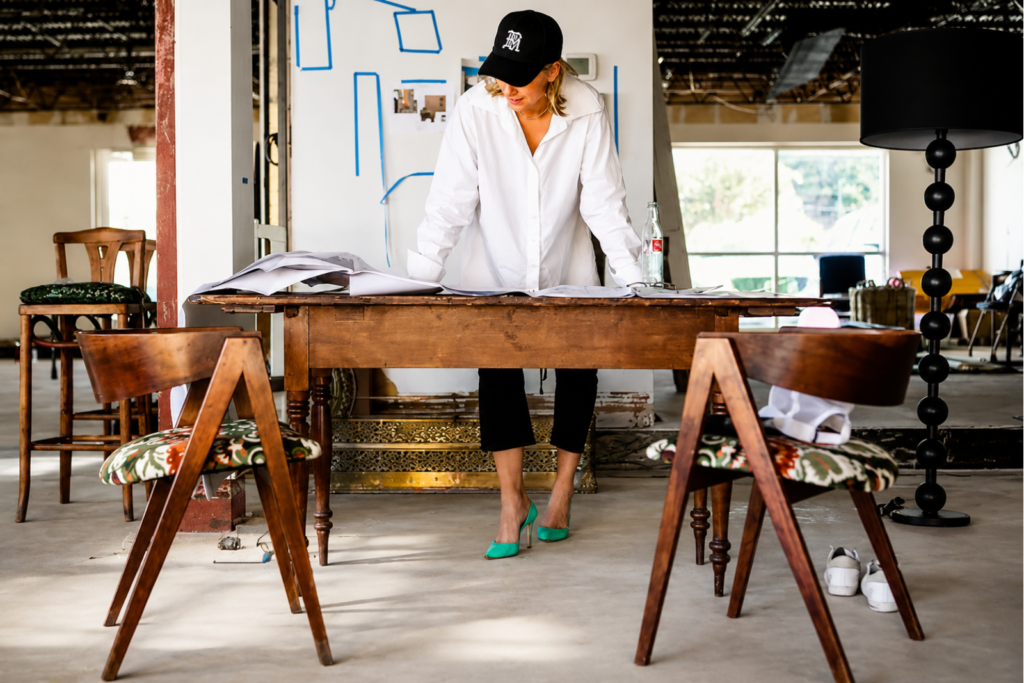
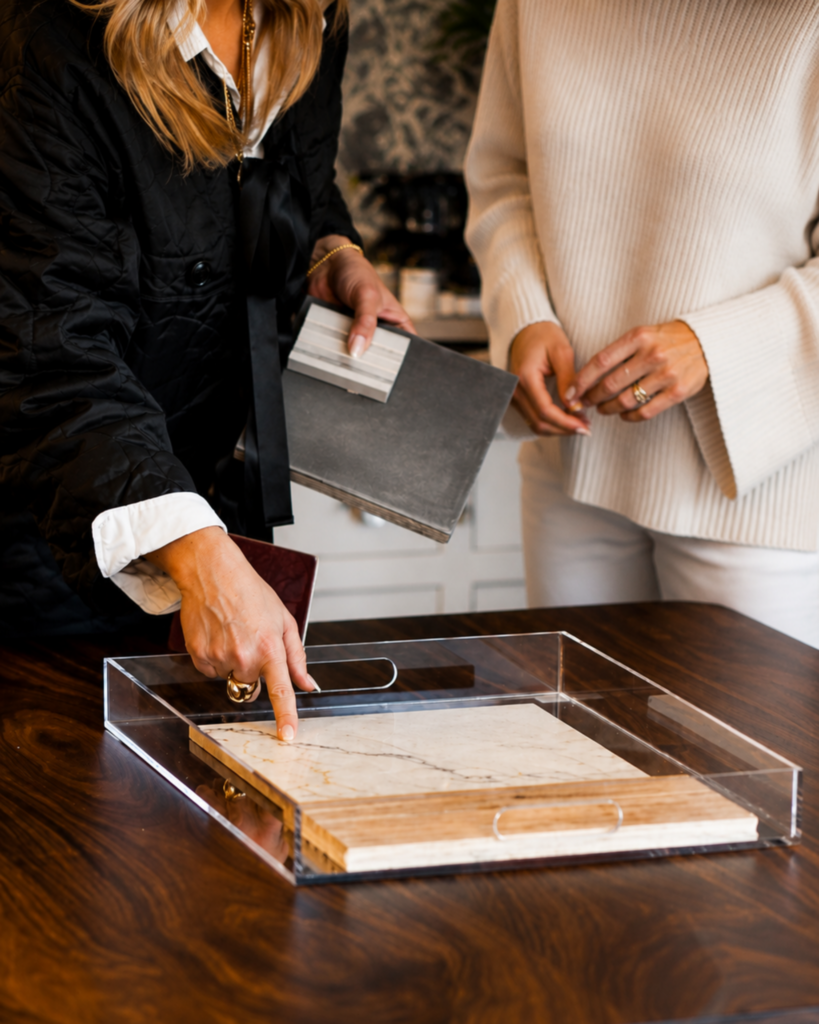
One of the things that surprises many homeowners going through a new build for the first time is the sheer volume of decisions involved. Thousands of choices—finishes, fixtures, materials, layouts, hardware, lighting, cabinetry, and storage—need to be made, often quickly, often under pressure, often without a clear sense of how each decision connects to the others.
Without a guiding vision, decision fatigue sets in. Choices get made reactively, based on what’s available rather than what’s right. And because those choices are interconnected, a compromise in one place often creates problems in another.
Working with an interior designer means those decisions are made with a clear, coordinated vision guiding them. Not in isolation. Not under unnecessary pressure. Not with the sinking feeling that you’re not quite sure if this is right.
The process becomes more efficient. The outcome becomes more refined. And the experience of building a home—which should be exciting—actually feels that way.
The Right Time to Hire an Interior Designer for Your New Build Is Now
Waiting to bring a designer into your new construction project often feels like simplifying the process. In reality, it usually does the opposite—creating more decisions to make later, under worse conditions, with fewer options available.
The earlier a designer is involved in new construction, the more intentional the home becomes. Fewer decisions need to be revisited. Fewer compromises need to be made. And the finished result reflects not just what was possible within the constraints of a partially built structure, but what was envisioned from the very beginning.
If you’re wondering when to hire an interior designer for new construction, the answer is simple: as early as possible, ideally before plans are finalized and long before construction begins.
Because in new construction, timing isn’t just about when things happen.
It’s about how well they come together.
Planning a New Construction Home in Annapolis, Maryland?
Building a new home is an opportunity to get everything right from the start—and we believe the most successful new builds begin with thoughtful, intentional design from day one.
If you’re considering when to hire an interior designer for new construction, starting the conversation early can make all the difference. At Details and Design, we partner with homeowners and builders in Annapolis, across Maryland, and beyond to create homes that are as considered as they are beautiful. Our process is collaborative, clear, and designed to make the building experience feel like the exciting milestone it should be.
Contact us to start the conversation—the earlier, the better.
Details and Design is a full-service interior design firm based in Annapolis, Maryland, specializing in new construction interior design, luxury home renovation, and custom residential interiors.